Period: 20-28 September 2026
Deadline for applications: 9 April 2026
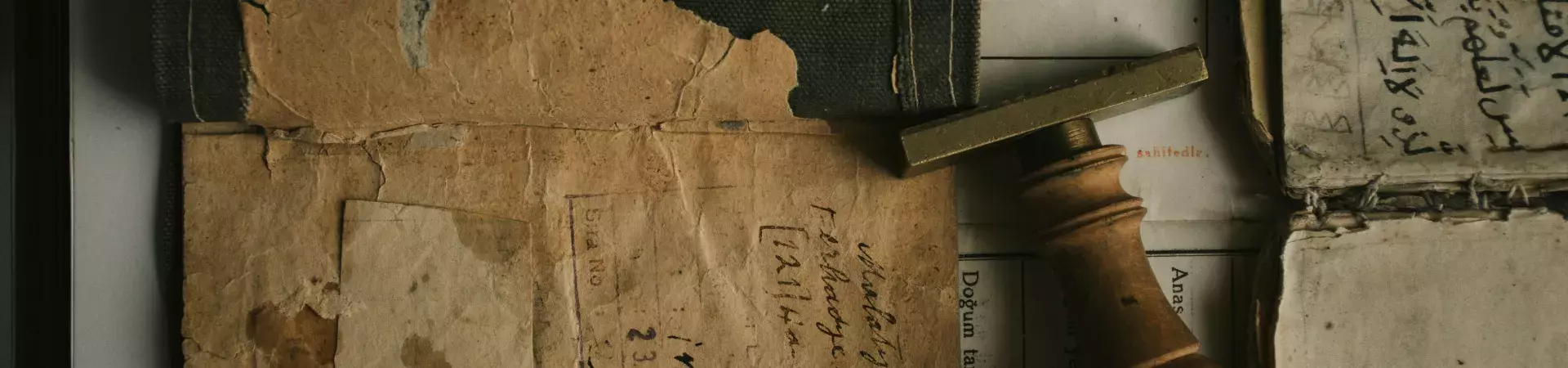
The Consortium for European Symposia on Turkey (CEST) is pleased to invite applications for the 2026 CEST Summer School, dedicated to the theme The Politics of Archives in Turkey and related Geographies. The summer school off ers a unique week-long theoretical and practical training focused on archives that preserve, organize, and disseminate materials related to the history of the Ottoman Empire and modern Turkey.
Preserving, cataloguing, organizing, and granting—or restricting—access to documents, newspapers, and ephemera is a distinctly political matter. If archives are to be considered “not as sites of knowledge retrieval but of knowledge production, as monuments of states as well as sites of state ethnography”, as Ann Laura Stoler argued, this means that we must adopt a critical approach and view the archives themselves, as well as practices of (des-)archiving, as objects of study. In contemporary Turkey and beyond, struggles over archival access, classifi cation, and digitisation are inseparable from broader debates on sovereignty, national history, identity claims, and the boundaries of permissible knowledge. Decisions about access and classifi cation are exercises of institutional sovereignty that shape which histories can be written and which remain marginalised.
In recent years, new collections have emerged or been opened, yet at the same time some archives or collections have been closed to the public. Meanwhile, numerous NGOs and private actors have engaged in alternative archiving practices. Besides, the possibilities off ered by the digitalization of documents have made thousands of items accessible even from a distance, to the point of creating an overabundance of some sources (to the detriment of other collections). How does the availability of online documents shape knowledge and research? What are the limits and advantages of building multimedia and transnational platforms for the preservation of digital documents? How do cataloguing practices and archival organization, shaped by heritage policies, hinder research on minority or marginal subjects, or on otherwise sensitive topics?
Beyond textual sources, archives also structure access to visual and oral history sources: what do these sources tell us, and how can we move beyond the immediacy and the fascination of aesthetically appealing materials?
The Summer School takes these questions as starting points to interrogate both the materiality and the politics of archiving across diff erent institutional and cultural settings.
Objectives
The Summer School has three objectives: The fi rst objective is to bring together young academics from Turkey and other countries in Europe to deepen the theoretical and empirical engagement with a wide spectrum of archival practices and challenges, with a focus on the (post-)Ottoman and Turkish contexts. The second objective is to equip participants with critical tools for navigating, analyzing, and problematizing archives and archiving practices—from the politics of access to the epistemology of cataloguing, from the circulation of digital sources to the biases of archival categorization. The third objective is to contribute to the participants’ skills development in the interrelated fi elds of writing and publishing, presentation and research funding.
The program combines seminars, guided discussions, practical exercises, and visits (virtual or on-site) to diff erent types of archives, such as:
- institutional state archives
- private and family archives
- activist and community archives
- digital and multimedia archives
Target Participants
Graduate students (advanced MA students and PhD candidates) and junior academics (within fi ve years of completing their PhD) whose research closely aligns with the summer school’s theme (Ottoman and Turkish history, anthropology, political science, visual studies, memory studies, heritage studies, and related fi elds) are invited to apply.
A strong interest in archival methods and/or the political dimension of knowledge production is expected.
Format and Activities
The one-week program includes:
- lectures by invited international scholars
- hands-on sessions with archival materials
- methodological workshops
- presentations by participants on their ongoing research
- excursions
Applicants are required to apply with draft papers (see specifi cations below) related to the theme of the summer school which they will present, discuss, and develop during the school. They will also prepare a short PowerPoint-based presentation on their research.
Application Requirements
Please submit your application as a single PDF fi le to cestws25@gmail.com by April 9, 2026. Add the subject line: "CEST 2026 Summer School Application – [Your Name]."
- Letter of motivation (max. 2 single-spaced pages),
- Summary of your work in progress (500 words),
- Short CV (1 page), including contact details for two referees who may be contacted for references,
- Full CV (3–4 pages),
- Draft paper (2,000–6,000 words) relevant to the Summer School theme (this may be a thesis chapter, a draft for publication, or a research paper you wish to develop),
- Indication of previous participation in a CEST event.
Your application must include: A panel of Consortium members will review applications. Successful applicants will be notifi ed by April 30, 2026.
Financial Support
Participation in the Summer School is fully funded, covering accommodation and meals, as well as travel reimbursement of up to €350. Selected participants are expected to actively contribute to discussions, present their research, and fully participate in all sessions.
Conveners
The Summer School is convened by
- Lea Nocera (University of Naples L’Orientale)
- Yavuz Köse (University of Vienna)
- Elise Massicard (Sciences Po – Paris/CNRS)

The CEST Summer School is part of the Consortium for European Studies on Turkey (CEST), a network of institutions and scholars established in 2015 to foster critical research on Turkey’s history, politics, and society. Members include scholars from SciencesPo Paris, the University of Vienna, Stockholm University, University of Deusto, University of Naples L’Orientale, University of Copenhagen and Ca’ Foscari University of Venice. CEST is supported by the Mercator Foundation and co-sponsored by the Keyman Modern Turkish Studies Program at Northwestern University.
Photo credit: Ahmet Polat