


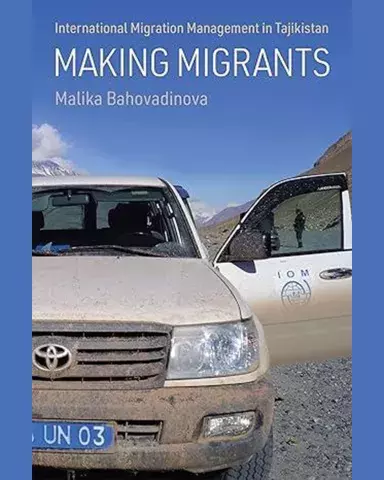
Making Migrants shows how Tajikistan’s migration bureaucracy turns citizens seeking work in Russia into “migrants,” a legal and administrative category used for regulation and control. Anthropologist Malika Bahovadinova argues that this process is shaped by Soviet postcolonial legacies, unequal relations with Russia and international actors, and the violence embedded in migration management. The book focuses on officials who facilitate labor migration from Tajikistan to Russia, where about 10 percent of Tajikistan’s population has moved for work. It shows that both Tajik and Russian institutions reproduce colonial ideas: Tajik workers are framed as “migrants” or “illegals,” while Russia benefits from their temporary labor and depicts them as potentially criminal outsiders.