


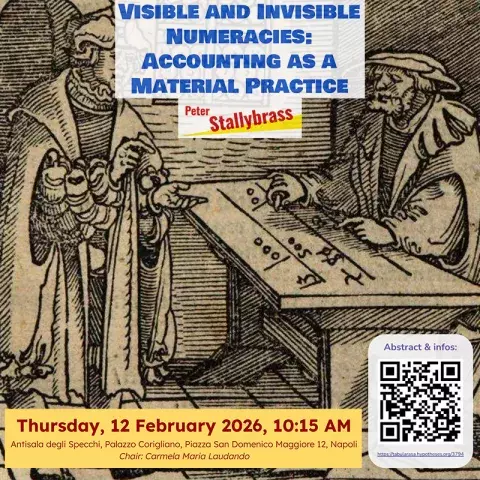
Siamo lieti di annunciare l'imminente conferenza di Peter Stallybrass (Annenberg Professor Emeritus in the Humanities presso la University of Pennsylvania), dal titolo: "Visible and Invisible Numeracies: Accounting as a Material Practice".
L'evento, presieduto da C. Maria Laudando, si terrà giovedì 12 febbraio 2026 alle ore 10:15, presso l'Antisala degli Specchi di Palazzo Corigliano (Piazza San Domenico Maggiore 12, Napoli; quarto piano).
Organizzato nell'ambito del progetto ERC TabulaRasa, l'incontro rientra nelle attività del Centro per lo studio e l'edizione dei testi (CESET). L'ingresso è libero e aperto a tutti.
Sinossi della conferenza
Migliaia di libri contabili manoscritti, prodotti da governi, ambienti aristocratici, mercanti e artigiani dell’Europa della prima età moderna, sono giunti fino a noi. La grande maggioranza di questi documenti riporta i risultati dei calcoli, senza tuttavia indicare le procedure attraverso cui tali operazioni venivano effettivamente eseguite.
Peter Stallybrass, Professore emerito presso l’Università della Pennsylvania, analizzerà una specifica serie di libri contabili inglesi relativi alle spese sostenute per festività e rappresentazioni teatrali di corte, al fine di esplorare le pratiche di calcolo adottate da esperti computisti privi di competenze di scrittura, che operavano senza ricorrere all’uso di carta e penna.
Peter Stallybrass è professore emerito di discipline umanistiche presso l'Università della Pennsylvania, dove ha fondato e diretto per 26 anni il seminario di Storia dei testi materiali. Peter è stato Samuel Wannamaker Fellow al Globe Theatre di Londra, Moses Aaron Dropsie Fellow al Center for Advanced Judaic Studies, Guggenheim Fellow ed è membro dell'American Philosophical Society. È autore di The Politics and Poetics of Transgression (con Allon White), Renaissance Clothing and the Materials of Memory (con Ann Rosalind Jones, vincitore del James Russell Lowell Prize della MLA per il miglior libro di lingue moderne) e Benjamin Franklin, Printer and Writer (con James Green). Il suo saggio con Heather Wolfe su “The Material Culture of Record-Keeping in Early Modern England” ha vinto l'Archival History Article Award della Society of American Archivists e sta lavorando con Heather e Ray Schrire su “Dots and Slashes in Early Modern Account Books”. Attualmente sta ultimando un volume dedicato alla Bibbia come testo materiale.